
Our top picks for ethically made, sustainable furniture manufactured without synthetic materials, and with the planet top of mind.

When I’m looking for truly sustainable furniture, I don’t just question a product’s materials. I also look at how and where those materials are sourced and processed, by whom and under what conditions, as well as the wider business activities of the manufacturer. Call me particular, I can take it.
And lest you should think sustainable, non-toxic furniture is only for the rich, I’ll note that Ikea makes my list and is one of my go-to budget picks for a whole host of home furnishings. And if that’s not sufficiently affordable of sustainable, here’s my big secret:
I did a quick inventory of my home furniture this morning and aside from one IKEA desk and bed frame I’ve had for 14 years, everything else I bought used. This is, by far, my preference for sustainable consumption. After all, it means:
- The furniture is local
- I don’t have to wait for delivery!
- It prevents usable items going to landfill
- It’s likely more affordable than new items
- No new resources are used.
The reality, though, is that you can’t always find the furniture you need right away in a local thrift store. Thankfully, there are sustainable, non-toxic furniture makers out there.
Before I dig into my top picks, though, here’s why I care so much about supporting and promoting sustainable, non-toxic furniture makers.
Air quality
Furniture and textiles are two of the major contributors to poor indoor air quality. Why? Because these items are often riddled with volatile organic compounds (VOCs) such as formaldehyde, benzene, and others that off-gas and pollute the air.
Choosing sustainable, non-toxic furniture helps to keep indoor air breathable and healthy, and it’s better for the planet, too.
As well as the materials themselves, it’s smart to find out how they were treated. This means checking for:
- Flame retardant chemicals
- Stains and dyes
- Polishes and waxes
- Stain repellents and water repellents.
Many of these are highly toxic and damaging to the planet and to the people making them, using them, and ultimately disposing of them.
Here’s a thought: Why not make a couch from materials that aren’t, essentially, gasoline and are instead naturally flame retardant?
It irritates me immensely that almost every couch out there is made with polyurethane, which is incredibly flammable. This means it has to be treated with toxic flame retardants before it can be deemed ‘safe’ enough for sale in the US.
In contrast, many natural materials, such as wool, are already flame resistant, meaning they don’t have to be doused in chemicals to meet safety requirements. Even latex isn’t anywhere near as flammable as solid gasoline.
Do better, couch makers.
Better materials
Solid wood is a great choice for furniture.
Sustainably sourced softwoods work for pieces that don’t see a lot of rough and tumble, whereas hardwoods are a good choice for furniture liable to be banged around a bit. Ideally, hardwood furniture will be made with reclaimed wood, given how long it typically takes for hardwood trees like beech, maple, and oak to grow and mature.
Solid wood is also a lot easier to refinish than laminates where you have to be careful not to sand through the top layer.
Going for unstained, natural wood finishes is best, then you can always choose to stain using natural materials at home – the bonus being that you can finish all your furniture with the same stain, so everything matches!
Metals such as steel, wrought iron, and aluminum are also good options for furniture, with steel and iron typically very hardwearing and durable. Steel and aluminum are almost endlessly recyclable too, meaning your old steel futon frame could become a new piece of furniture in the future.
As for cushions, great options include:
- Natural latex
- Wool
- Kapok
- Recycled down.
Recycled steel springs and wooden slats also work well to reinforce cushions.
Organic cotton, hemp, or linen covers work well when washable, and wool is a great material for an outer wrap to meet standards for fire resistance.
Certifications to look for
There’s no shortage of sustainability certifications for furniture, though some amount to little more than industry greenwashing. Ones to look for that actually mean something include:
- Forest Stewardship Council (FSC)
- Cradle to Cradle (c2c)
- SCS Indoor Advantage Indoor Air Quality
- Global Organic Textile Standard (GOTS)
- Global Organic Latex Standard (GOLS)
- B-Corp
- Fair Trade
- ISO 9001.
Other, lesser, but still meaningful certifications include:
- Greenguard Gold
- Oeko-Tex Standard 100 (or, better, Standard 1000).
Our top picks
Here are our picks for the best sustainable furniture brands based on our leaf rating methodology.
Ecobalanza

Highlights: Seattle-based company making beautiful, sustainable furniture using natural, non-toxic, eco-friendly materials. No composite woods, polyfoams, or flame retardants, just plenty of robust accreditation and excellent warranties!
- Boutique and ethical upholstered furniture
- Made in Seattle using traditional techniques
- Features natural and recycled non-toxic materials
- No polyfoams or composite wood with formaldehyde
- Only uses zero VOC wood stains and finishes
- Wool used as a flame barrier, instead of toxic flame retardants
- Offers an Essentials and Couture Collection
- Can make custom couches, sectionals, loveseats, ottomans, and more
- Lifetime guarantee on sofa frames and structure
- 10-year warranty on latex cushions and 5-year warranty on kapok cushions (though both can last far longer)
- Understandably more expensive than cheap and toxic furniture
- A popular company! It can take 3 months to make and deliver some items
EcoBalanza is a Seattle company making arguably the most eco-friendly furniture around. The company uses non-toxic and sustainably sourced materials for the structural components of furniture and also sources eco-friendly fabrics. These include GOTS certified organic cotton from its women-owned textile partner, Two Sisters Ecotextiles, located close by in Seattle.
EcoBalanza couches feature:
- Hardwood frames that are sturdy and sustainable – made with FSC certified Alder and Western Maple
- Sustainably harvested organic GOLS Dunlop latex to pad cushions
- Inner wraps comprising certified organic merino wool for natural flame resistance
- Traditional practices (e.g., hand-tying steel coils with jute fiber cord) to make strong, comfortable, and sustainable sofas.


If you want a more stain-resistant couch, you can choose recycled polyester upholstery and Greenshield stain resistant treatment or leather. The leather is vegetable-tanned and free of heavy metals and major allergens, with credible certification to back up that claim.
EcoBalanza’s big idea is to make furniture you’ll love and that will last for generations to come, which is why the company offers a lifetime guarantee on the frame, springing and structural craftsmanship of every sofa.
There’s a lot to love about EcoBalanza, including that all the furniture is made in the company’s Seattle factory. Everything in the space is non-toxic. You can even visit the workshop to see for yourself!
Avocado

Highlights: Sustainable company selling mattresses and bed frames, nightstands, dressers, and more.
- Member of the Sustainable Furnishings Council
- Furniture made with reclaimed or FSC certified wood
- Certified B Corp
- Smart designs that are durable and beautiful
- Materials are free from heavy metals, formaldehyde, solvents, and other troublesome chemicals
- Zero-VOC sealant only
- 1% for the Planet member
- CarbonFree® Partner, offsetting 100% of emissions
- Ethical workplace and company
- Many products not available in Canada (my biggest gripe!)
- A little pricey
- Small range only
Avocado offers some of our favorite eco-friendly mattresses (for humans and pets), as well as a small range of beautiful bed frames (staff tested!), end tables, and dressers. These are made with reclaimed or FSC certified wood and designed to last.
Thanks to Avocado’s smart designs, these pieces have no unnecessary handles, knobs. This means there are fewer components that can easily break, get lost, or that require gluing.
Avocado donates 2% of annual revenue (not just profit!) to EcoHealth Alliance, Breast Cancer Prevention Partners and others. The company also has a range of other charitable and sustainable initiatives and donates over 90% of returned items. That earn it top marks from us!
Free eBook: Simple Steps to a Greener Home
Concerned about climate change? Learn actionable tips for making each room in your home greener.
"*" indicates required fields

Emeco

Highlights: Longstanding, very eco-friendly company with a robust environmental commitment. Minimalist chairs, stools, end tables and other items made with recycled materials.
- Robust, durable seating and tables
- Made with sustainable materials – natural and recycled synthetics
- VOC-free clear coat anodizing finishes on aluminum furniture
- Low-VOC finishes on wood pieces
- Wood pieces made by local Amish craftsmen
- Metal pieces made in-house
- LEED-certified family factory in Hanover, Pennsylvania
- Very transparent about environmental product certifications and commitments
- Energy efficient factory with LED lighting, renewable power, and water conservation courtesy of specialized welding machines
- Designs minimize waste, and any waste is reused or recycled
- 100% recyclable packaging materials
- Offers a chair-to-chair recycling program for plastic and aluminum furniture.
- Upholstery options could be better
Emeco was founded in 1944 as a result of a commission to make non-corrosive, fire-resistant, and torpedo-proof chairs for the US Navy. So, if you’re looking for robust furniture, this is it!
Nowadays, Emeco offers this classic 1006 Navy Chair (built to last 150 years at least) alongside a range of other items, including some beautiful:
- Bar stools
- Desk chairs
- Dining chairs
- Shelving.
These are all made from recycled and reclaimed materials. These materials include recycled aluminum from post-consumer soda cans and post-industrial manufacturing scrap. This metal has a significantly lower energy footprint than virgin aluminum but is just as strong.

Other materials include:
- Cork
- Sustainably harvested or locally reclaimed wood
- Recycled PET (from water bottles and such)
- Glass.
Excitingly, Emeco has even invented its own materials, including Eco Concrete made with recycled glass bottles and calcium sulfoaluminate cement. This material is great for outdoor furniture as it is weather resistant, and it uses significantly less energy to process and fire compared to regular cement. Other Emeco concoctions include Reclaimed Wood Polypropylene made with plastic scraps from factory floors and sawdust from lumber yards.
Some of the upholstery materials leave a bit to be desired, though the company does strive to use recycled leather, polyester, and other sustainable materials. Check listings carefully if you would rather avoid synthetics, leather, or conventional cotton or wool.
Medley

Highlights: Well-designed hardwood furniture made in the US using eco-friendly materials (for the most part) in a range of styles.
- Sustainably sourced, eco-friendly materials
- Wide range of furniture and styles
- No harsh chemical treatments or fire retardants
- Zero-VOC glues and natural jute webbing
- Organic fabrics in furniture linings
- Several organic fabric choices available for upholstery
- Most materials are Oeko-Tex 100, GOLS, GOTS, or Greenguard Gold certified
- Very transparent about materials and happy to answer questions via email or phone
- Makes every item to order
- Ships to every US state, Canada and almost anywhere else in the world
- Lifetime warranty on alder hardwood frames
- Most sofas do not require assembly (with the exception of those with longer legs)
- 100-day trial and free returns
- Offers CertiPur foam as an option for cushions
- Uses down filling
- Delivery can take a bit longer than an off-the-shelf model
Medley is a California based furniture company that hand builds well designed, sturdy and modern:
- Sofas and sectionals
- Storage solutions
- Accent chairs and tables
- Dining tables and chairs
- Office furniture
- Bedroom furniture
- Poufs, benches, and ottomans.
The company favors certified organic Dunlop latex cushions with responsibly sourced down filling, but also offers CertiPur-US® poly foam cushioning at a lower cost.
There is some wool in some Medley furniture, mostly as an upholstery fabric and filling for chairs and sofas. This wool is Oeko-Tex 100 certified and comes from well cared for sheep.
Medley uses kiln-dried alder for its furniture frames and solid maple and walnut for tables and other (as well as some bamboo). The hardwoods are grown in the US, FSC certified, and treated only with non- or low-VOC waxes and stains.
For drawer bottoms and sides of storage pieces, Medley uses lightweight FSC certified, low-VOC CARB 2 compliant plywood.
To polish furniture, Medley uses Daddy Van’s mixture of natural beeswax, carnauba wax, and olive oil. The polish is:
- USDA certified bio-based
- Odor-free
- Free from toxic VOCs.
For every tree used to make its furniture, Medley plants three trees in partnership with the National Forest Foundation. A single alder tree can make around three Medley sofas or one large sectional, according to the company, and the trees used in Medley furniture can take 25-40 years to mature.
Floyd

Highlights: Eco-minded US-based furniture company making smartly designed and convertible modular pieces using sustainably sourced wood.
- Modular designs that adjust as your circumstances change
- Easy to put together and to replace or fix parts
- Mostly sustainable materials
- Made in the US using American grown wood
- Mostly Forest Stewardship Council (FSC) certified wood
- Not all materials are VOC-free
- Pricey
- Small range of styles (but growing!)
Floyd operates with the ethos that “furniture should be made for the home, not the landfill.” This is why the company uses smart designs where individual pieces can be replaced or fixed if they break. These simple, stylish, modular design also means that many of the pieces, such as the Floyd bed can be easily converted, such as from a Queen to a King size (or vice versa).
Floyd offers:
- Bed frames
- Sofas and sectionals
- Tables
- Storage
- Accessories.
By 2025, Floyd has committed to:
- Launching a Resale and Refurbishment program
- Ensuring 70% of material comes from either recycled or renewable sources
- Minimizing packing materials
- Eliminating single use plastics
- Using 100% FSC certified wood across all products.
The company also measures, discloses, and is committed to reducing greenhouse gas emissions across its supply chain.
IKEA

Highlights: Yep, that IKEA. The Swedish giant is ahead of the curve on sustainability, offering responsibly sourced wood and textiles, smart designs that minimize waste, and factories and outlets powered by renewables.
- Longstanding commitment to more sustainable manufacturing
- Strives to be energy efficient in operations
- Economies of scale help reduce waste and reuse scrap
- Phased out all single-use plastic products from the global home furnishing range in January 2020
- Makes products using biobased plastic from renewable sources
- Committed to only using plastic based on renewable or recycled material by 2030
- Committed to using 100% Responsibly Sourced Wool by 2025
- Sources 100% of its cotton sustainably – recycled, or grown with less water, chemical fertilizer and pesticides (not organic though)
- Increasingly using bamboo for furnishings
- Promotes more sustainable plant-based foods in the IKEA food hall and market
- Ethical hiring practices (inclusive and diverse) – employment and education programs focusing on marginalized groups
- Aims to be fully powered by renewables by 2030
- Produced as much renewable energy as it consumed in 2020, thanks to investments in wind turbines and solar panels
- Easy to find second hand items and replacement hardware
- Encourages unnecessary consumption and throwaway culture
- Not clear if company met stated commitment to source 100% of all wood as FSC certified by the end of 2020
- Very few organic certified materials
Sure, the big box stores might not seem sustainable, especially as they arguably encourage unnecessary consumption, but IKEA has ambitious sustainability goals and is on track to meet them.
IKEA also enjoys certain advantages of scale, including being able to carefully plan, cut, and shape wood so as to minimize waste. Scrap wood from larger pieces can be used to make things like storage boxes and other knickknacks.
The trick with IKEA, though, is to only buy things you actually need and to choose the most sustainable products. This largely means sticking to simple softwood items made with pine wood from sustainable sources.
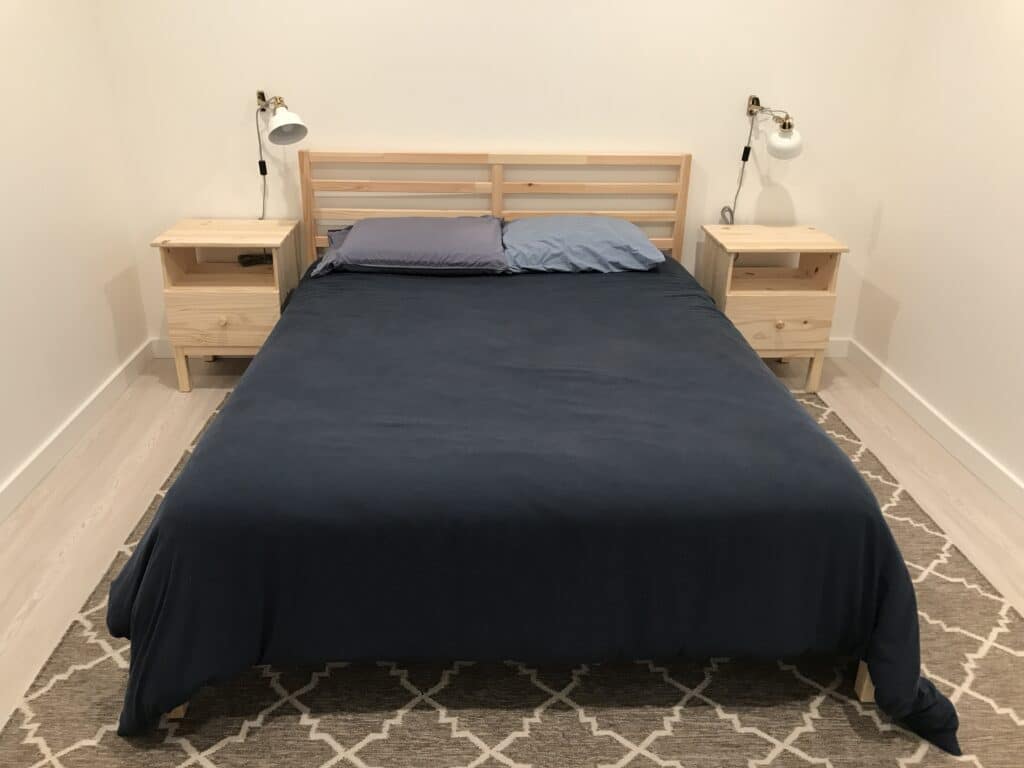
When furnishing a rental suite recently, I chose the simple pine nightstands, bench, and bedframe as affordable, sustainable options that we could stain at home, for instance.
I’ve also acquired several second hand IKEA items, including a toddler bed, twin loft bed, day bed, couch, and toy storage, among other things. These have all proven quite robust and easy to repair or repaint or stain as needed.

Other good options include outdoor furniture made with acacia, a durable and rot-resistant wood from FSC certified plantations.
Interestingly, IKEA has acknowledged that unsustainable consumption is one of its biggest challenges and has committed to figuring out ways to prolong the life of its products and make them easier to repurpose, repair, reuse, resell and recycle as part of the circular economy. To this end, the company is working with the Ellen MacArthur Foundation and the Circular Economy 8 (CE8), which bodes well!
Sprout Kids

Highlights: Delightful kids furniture made in the US with eco-friendly Baltic Birch. Designed to last and adjust as your kid grows.
- Eco-friendly materials
- Kid-friendly designs
- Easy to assemble and reassemble
- Adjustable as child grows
- Sustainably sourced US hardwood and Baltic Birch plywood
- CARB compliant plywood that meets or exceeds fairly rigorous standards for VOC off-gassing
- Interchangeable parts, for easy repair and replacement
- 5-year warranty during which damaged parts can typically be replaced for free
- Low-cost replacements for most parts after 5 years
- Ships items flat to reduce carbon emissions and resources
- Storage bins and packaging comprise up to 30% post-consumer recycled material
- Minimal packaging, almost all recyclable
- More affordable Value-Grade items available – functionally and structurally secure and a great way to reduce waste
- Plywood, not solid wood
- A bit pricey
Sprout Kids offers a delightful range of Montessori inspired furniture for children. The company is clearly committed to sustainability.
Sprout Kids uses hardwoods are sourced primarily from sustainably managed forests in Oregon and Washington. Most of the company’s products are made from engineered wood products from pre-consumer recycled materials, meaning sawdust and fall-off from lumber cutting.
Baltic Birch plywood is an industry leading material made using birch veneers from north-east Europe (the Baltics) and is popular for cabinetry, skateboards, and airplane furnishings.
This specialized plywood:
- Is highly resistant to cracking and warping
- Has few voids (means it’s stronger)
- Is very strong and lightweight
- Looks great!
- Uses the same material throughout, rather than softer wood in the center as with most plywood
- Is fine-grained and has a satin-like sheen – super easy to clean and maintain.
The plywood is finished in the US using non-VOC ultraviolet cured finish (an epoxy acrylate topcoat) or water-based paints and a non-VOC UV cured finish. This is pretty much as good as it gets for this kind of furniture!
Free eBook: Simple Steps to a Greener Home
Concerned about climate change? Learn actionable tips for making each room in your home greener.
"*" indicates required fields
Etsy Reclaimed Furniture

Highlights: A wide variety of bespoke and one-off items made by small-scale artisans using reclaimed materials. Etsy offsets all shipping-associated carbon emissions and many vendors donate a portion of profits to environmental causes.
- Unique, boutique finds
- Great prices!
- Helps keep products out of landfill and in use
- Lots of natural and reclaimed or recycled materials
- Can often ask for custom pieces, finishes, etc.
- Can sometimes find things locally, for reduced carbon emissions
- Etsy offsets all carbon emissions associated with shipping!
- One-off pieces usually – things go fast!
- It can be hard to find matching sets sometimes
- Different sellers with different policies and transparency about materials
- No standard testing for material safety and toxicity
Etsy offers some amazing, unique, eco-friendly, sustainable furniture in its Reclaimed Furniture category. You can find real bargains here, and your purchase supports small business owners. The only downside is that these smaller scale operators don’t have splashy environmental reports and sustainability goals neatly laid out for potential buyers, so you’ll often have to ask about the exact materials and finishes used in each piece.
This Etsy category has a lot of turn over, with one-off pieces popping up nearly constantly and going just as fast. Creative furniture makers offer things like:
- Driftwood coffee tables
- Oak barrel wine racks
- Live edge coat stands
- Unique headboards and doors
- Woven raffia chairs.
Materials most common in this category include:
- Salvaged lumber
- Fallen logs
- Driftwood
- Pallets (I once made a pallet couch for my balcony – a super fun project!)
- Upcycled metal such as iron piping.
Because these materials pose potential safety concerns, have a clear idea of what you’re buying before finalizing a deal. In general, I’d steer clear of anything intended for babies or small children. Unlike new furniture made and sold in the US, these one-off items are not subjected to rigorous safety testing or testing for heavy metal contaminants.
Two good places to start are Reclaimed Wood USA and Urban Billy. These US-based sustainable furniture brands use reclaimed materials to make farmhouse inspired furniture for the modern home.
Etsy Reclaimed small scale operators typically work to order and out of their own homes or studios. This means less waste and fewer overheads associated with big factories and large runs of items that may go unsold.
Pottery Barn – Sustainably Sourced

Highlights: A specific catalog within the more well-known Pottery Barn’s wide list of offerings is particularly eco-friendly and worth consideration.
- Wide range of furniture
- Well known company
- Hardwearing and easy to maintain (usually)
- Easy to resell later
- Some certifications, such as Greenguard Gold, for some products
- Not as eco-friendly as the options above
- Pottery Barn isn’t very transparent about all of its materials and processes
- Expensive
Pottery Barn merits a mention here for its Sustainably Sourced catalog. This product range of a couple hundred or so items includes:
- Beds
- Shelving
- Tables
- Chairs
- Sofas
- Outdoor furniture.
These are often made from reclaimed wood and recycled materials, with Greenguard Gold certification in some cases. Many are also Fair Trade certified, and the products are typically hard wearing, well designed, and easy to maintain and/or resell.
Sabai

Highlights: A good pet-friendly option for couches, chairs, and more. Made in the US with CertiPur foam, FSC certified low-VOC plywood, maple, and recycled or upcycled synthetic fabrics by a company offering a range of buy-back, repair and replace, and trade-in programs for sustainability.
- Family-owned company with good labor practices
- Luxury furniture at a good price
- You can order free fabric swatches
- Furniture is fully customizable
- Orders are made and shipped within 2-4 weeks
- All furniture is tested to withstand ten years of regular use by someone weighing 275 lb.
- Almost all (90%) of materials come from within 100 miles of production
- No glues used to upholster the furniture
- No flame retardants
- Frames are made with FSC certified birch and pine plywood
- Wooden legs are made with domestically sourced maple
- Uses low-VOC stains
- Ships flat in multiple packages – more eco-friendly and easier to assemble
- All orders ship free over $100 across the US (low fee to Alaska and Hawaii)
- Plastic-free shipping and 100% recycled cardboard boxes.
- Cushions are CertiPur polyfoam
Sabai, based in North Carolina, is an eco-minded company making luxury furniture including:
- Sectionals and sofas
- Loveseats
- Ottomans
- Chairs.
These are all made with a variety of mostly sustainable materials.
Unfortunately, their seat cushions are padded with CertiPur US® poly foam, with no alternative offered. CertiPur foam is a little better than most polyurethane foams in that it has no flame retardants or formaldehyde added, but it would be nice to see organic Dunlop latex offered as a cushion fill instead. The back cushions are filled with recycled polyester batting.
Sabai uses the following synthetic fabrics that are stain resistant due to composition, not treatments:
- Upcycled polyester (olefin, a byproduct of oil refining)
- Recycled velvet (created from plastic bottles) – with GRS certification and Oeko-Tex 100.
Because each piece is made with mechanical fasteners rather than glues, this allows easy recycling at end of life.
Free eBook: Simple Steps to a Greener Home
Concerned about climate change? Learn actionable tips for making each room in your home greener.
"*" indicates required fields
Alabama Sawyer

Highlights: If a tree falls in the forest… can you make an end table from it? If you’re Alabama Sawyer, yes!
- Unique brand offering custom furniture from your own (and local) trees!
- Low carbon emissions due to local sourcing and processing
- Ships with “blanket-wrap” shipping where possible, to protect furniture and ensure reusable packaging
- Lead time is generally eight to twelve weeks
- Lead time can be years if using your own trees!
This (surprise!) Alabama-based furniture company is a wife-and-husband operation intent on turning local tree waste into usable items such as:
- Shelving
- Credenzas
- Desks
- Seating
- Tables.
The couple gathers logs in their local community, including from houses, businesses, and city-owned properties (legally, one assumes). The logs are then processed, and the wood is carefully stacked and dried locally for half a year or until 70% of the water is evaporated. The wood is then kiln fired to make it more robust and durable, and is brought to the company’s wood shop in North Birmingham where each plank is turned into a unique piece of furniture or home accessory depending on its size, type, and other qualities.
If you live in Alabama and have a tree that has fallen or needs to come down and measures at least 20 inches wide, you may even be able to work with Alabama Sawyer to make a truly bespoke and personalized piece or suite of furniture!
Oh, and the company’s tagline is pretty cute: Trees Fall Y’all!
Final thoughts: Smart design for sustainability
When assessing the sustainability of furniture, look for smart designs that will work with you as your family grows and/or if you move to a new house. This might mean looking for:
- Sectional couches that can be reconfigured to fit different spaces
- Tables with inserts or leaves that let you adjust the length
- Beds that accommodate mattresses of different heights.
This kind of versatility is really important when it comes to choosing more sustainable kids furniture. Look for:
- Change tables that convert into dressers
- Cribs that convert into toddler beds and then full beds as your kid grows
- High chairs that convert into regular dining chairs.
Smart design also means that individual components can be replaced or fixed if broken. This avoids having to scrap a whole piece of furniture.
Finally, look for furniture made using recycled materials that can themselves be recycled. This helps foster a circular economy that doesn’t waste resources and helps conserve energy.