
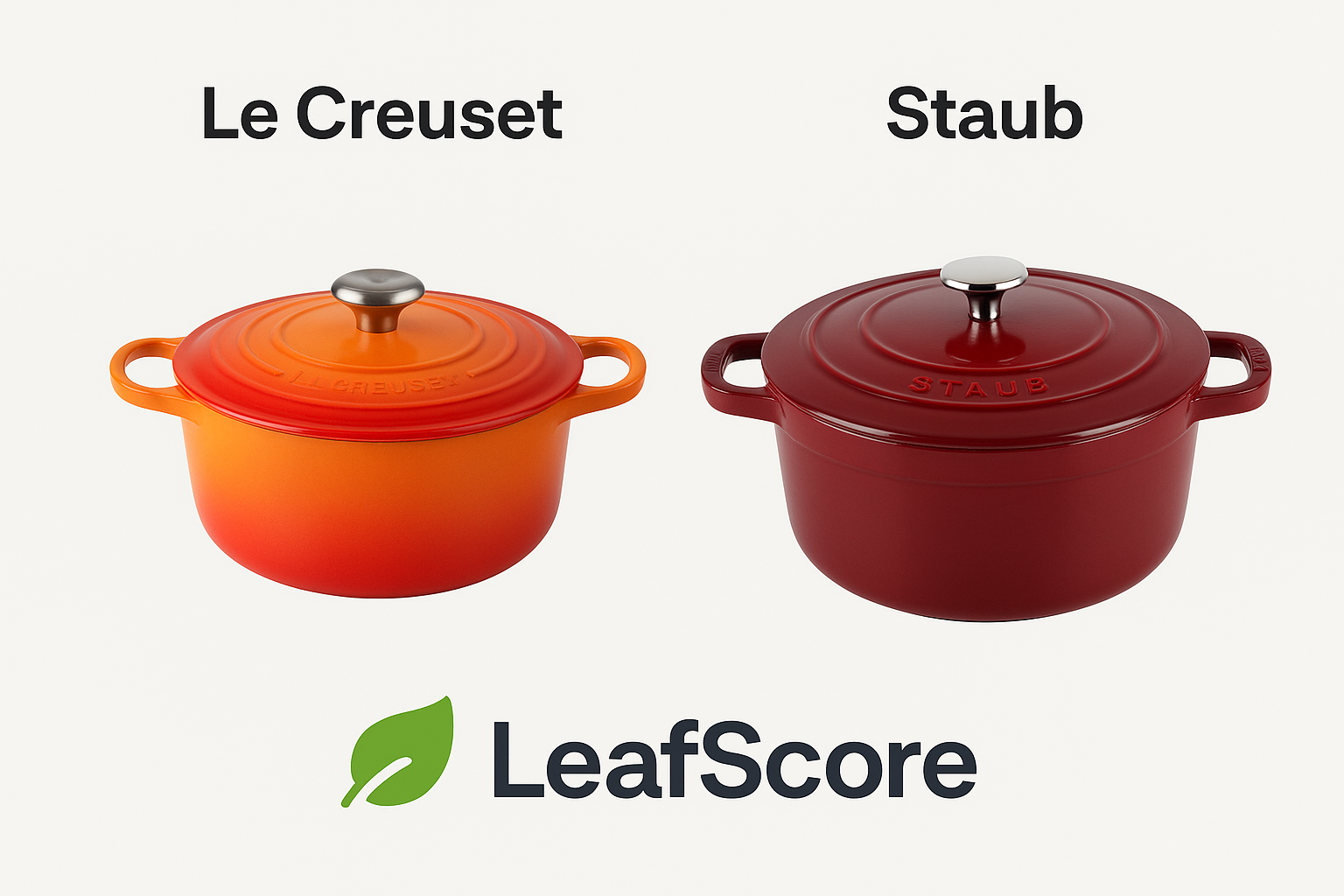
Le Creuset and Staub both make Dutch ovens in France, using cast iron with glossy enamel coatings. These Dutch ovens aren’t interchangeable, though. Here are the key differences, looking at construction, durability, usability, and sustainability.
| Le Creuset | Staub | |
|---|---|---|
| Materials | Enameled cast iron | Enameled cast iron |
| Colors | 20+ options (incl. light or dark interiors) | 10 or so colors (dark interiors only) |
| Sustainability | Recycled materials, ethical labor standards, solar powered offices, made in the EU | Recycled materials, made in the EU, FSC certification, climate neutral goals |
| Features and performance | Self-basting lid, lighter weight, dishwasher-safe, many color options including light interior | Self-basting lid, can use metal utensils, dishwasher-safe, suitable for high temp cooking, more robust overall, darker and earthier aesthetic |
| Price | More expensive | More affordable |
| Test results/transparency | None published by company; independent testing suggests heavy metal traces in some colors | Publishes annual sustainability report and test results |
Shop LeafScore Rated Cookware
Le Creuset Enameled Cast Iron Dutch Oven

Materials and Construction
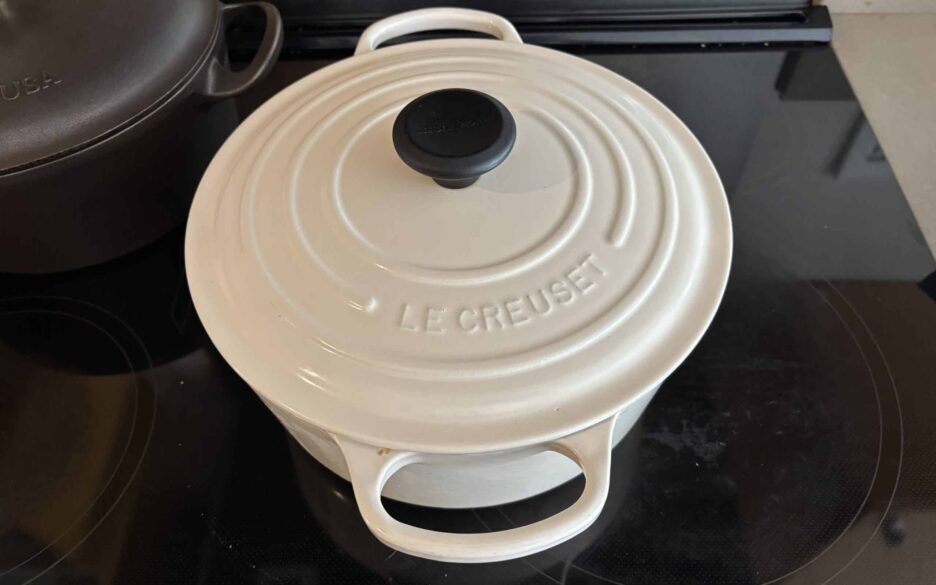
Le Creuset makes its Dutch ovens in northern France using sand molds unique to each piece. The company employs skilled artisans and uses recycled steel from the auto industry. It has a 12-step process from foundry to coating the piece with a smooth, glossy enamel.
Unfortunately, Le Creuset uses a phenolic-resin knob on its lids. Essentially, this is a plastic Bakelite knob, which means the lid is only oven-safe to 500 F and isn’t as eco-friendly as you might think.
Staub also makes its Dutch ovens in France, using recycled materials and durable enamel.
Aesthetics and Design
Typically, Le Creuset Dutch ovens have a cream color interior, though some black interiors are available. The company’s signature orange color is actually just part of a broad palette of colors. These are all created using durable exterior enamel.
Staub’s Dutch ovens typically have a matte, textured black enamel interior and a heavier, understated look compared to Le Creuset’s lighter aesthetic. Staub also offers fewer colors overall, mainly as bold earth hues. The Staub lid features ‘self-basting spikes’ to collect moisture and redistribute for a juicier roast or braising process.
Shop LeafScore Rated Cookware
The inside of a Staub Dutch oven will gradually develop a patina or seasoning. Don’t let the seasoned look fool you, though; this enamel is very durable and largely tolerant of metal utensils. This is one reason why high-volume professional chefs favor Staub.
Non-toxic cookware?
Unfortunately, some of Le Creuset’s exterior colors have tested positive for traces of cadmium. The good news is that the interior enamel routinely tests as lead-free and cadmium-free.
As for Staub, its Dutch ovens are made using lead- and cadmium-safe enamel that complies with EU and US (California Prop 65) regulations. Staub’s parent company, Zwilling, also publishes annual independent compliance audits.
Overall, Staub wins for transparency and gets the LeafScore seal of approval for non-toxic Dutch ovens.
Usability and Performance
Le Creuset uses a glossy enamel finish that is extremely smooth and non-reactive. That means you can safely cook with acidic foods like tomatoes and wine, which otherwise react to uncoated cast iron.
The signature Le Creuset Dutch oven offers a substantial 6.75 qt. capacity and has a self-basting lid with concentric circles. If food sticks, the enameled cast iron is technically dishwasher safe. I still suggest handwashing though, to extend its lifespan.
Le Creuset Dutch ovens are quite a bit lighter than Staub’s. The lighter interior color makes it easier to check on caramelization and fond, compared to the darker Staub interiors.
With Le Creuset, chips and discoloration of the enamel will develop over time. This will happen faster with thermal shock, so avoid sudden temperature changes or high temperatures.
With Staub, chips and discoloration are less noticeable due to the darker interior, which is also more durable than Le Creuset’s. Staub Dutch ovens handle metal utensils, high heat, and aggressive cleaning better than Le Creuset.
The spiked Staub lid is also a popular feature for locking in moisture and flavors. If you’re a fan of using Dutch ovens for slow-cooking, Staub is the way to go.
That said, the durability of Staub’s Dutch ovens also means they’re heavier than Le Creuset’s. If weight isn’t an issue, go for Staub. If you plan to use the Dutch oven at higher temperatures, go for Staub too; Le Creuset’s resin lid knob means it is less oven-friendly overall.
Shop LeafScore Rated Cookware
Sustainability
Le Creuset has a lot going for it in terms of sustainability, including:
- Use of recycled metals
- Solar-powered offices
- Meaningful steps towards zero-waste manufacturing
- Good labor standards.
On the flip side, Le Creuset also has:
- That resin/Bakelite lid knob!
- Some cookware lines that contain PFAS
- Cookware made in places with lower labor standards
- Issues with trace heavy metals in some exterior finishes
- Lack of transparency for materials and testing.
Overall, though, Staub earns the most sustainability points thanks to its:
- Use of recycled materials
- Strict adherence to EU and California Prop 65 standards
- Transparency through annual sustainability reports
- FSC certification of its wood products
- Ambitious climate-neutral factory goals
- Cookware and bakeware that is entirely free of PFAS
- Commitments to producing safe, durable, and low-waste cookware.
Pricing
Staub and Le Creuset are similar in pricing, though Staub is a touch more affordable overall.
Final thoughts
The classic Le Creuset look is hard to beat, but Staub wins for durability, sustainability, and overall design. Staub is also a touch more affordable and overall more forgiving and high-performing.
If you prefer Le Creuset’s look and lighter weight, it’s still a solid investment. My advice, though, is to avoid brighter colors historically linked to trace heavy metals.