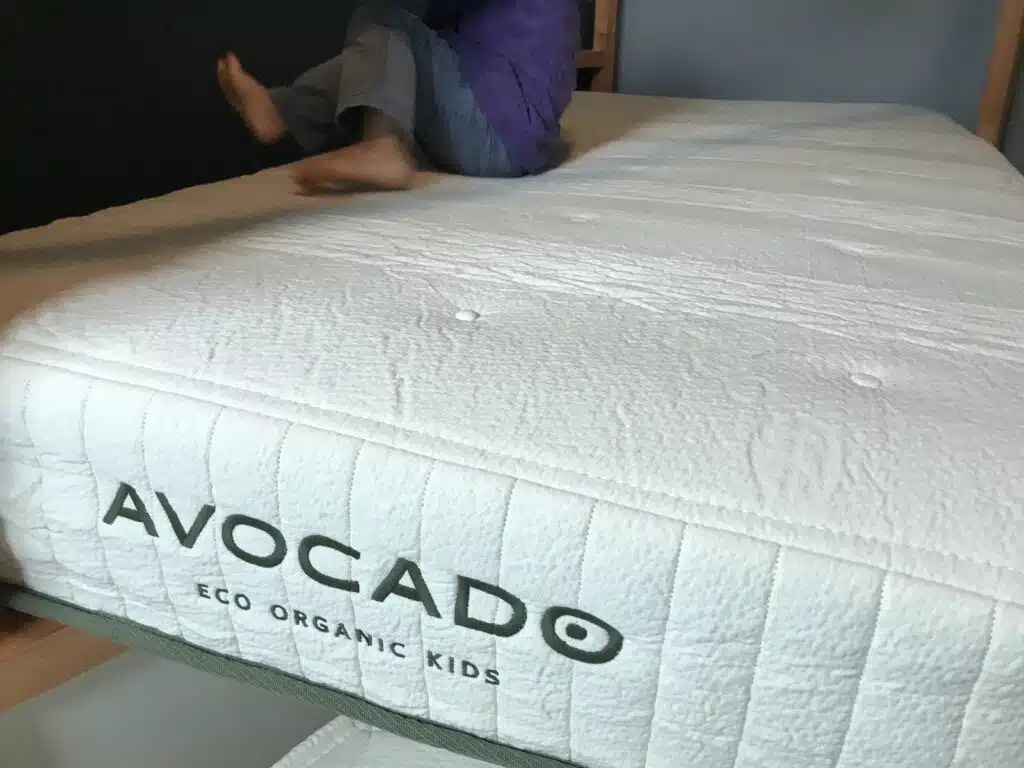
The company’s vertical integration is one of the things we value about Avocado. It allows the Benefit Corporation far more control and oversight of processes that could otherwise be vulnerable to fraud and poor practices by bad actors. The caveat, of course, is that you’re placing a lot of trust in the company, rather than independent third-party certifiers and auditors.
Avocado is also rare in that it uses blockchain technology to track raw materials through to final products. This adds credibility to paper-based certifications such as GOTS that can otherwise suffer from fraud.
However, Avocado claims radical transparency about its materials but doesn’t reveal which chemicals it uses to turn rubber sap into usable molded latex for its products.
Having said that, it would be unusual for Avocado to use the more hazardous chemicals listed in the lawsuit that was dismissed several years ago, given that both GOTS/GOLS certification and the MadeSafe™ standard prohibit the use of egregious synthetic chemicals. We will confirm this when Avocado verifies their brand listing.
It’s an open secret in the natural mattress industry that some synthetic chemicals are always necessary to turn rubber tree sap into usable latex.
Does this make Avocado’s impressive list of certifications less credible? Let’s break it down.
GOTS has outright bans on many hazardous chemicals, even for the 5% of non-organic materials allowed in a final product. However, GOTS does not actually test products, so it could issue an organic certification even for a product that doesn’t fully comply with the standard.
Similarly, MadeSafe™ certification doesn’t involve product testing. Instead, both certifications rely on companies being transparent about the chemicals and materials it uses to create products. And with MadeSafe™ there’s an extra caveat. The certification gives companies a little wiggle room by saying:
“Some substances may have category specific allowances or technically unavoidable content, in which case either additional testing or threshold requirements may apply.”
This could, then, apply to the chemicals Avocado and other mattress companies use to produce natural latex mattresses. After all, there is currently no way of making molded latex without synthetic additives that act as accelerators and drying agents. This means the chemicals are ‘technically unavoidable’ under MadeSafe™ rules. We will flag this issue for further review and report back to our readers.
In terms of environmental impact, Avocado carries Climate Neutral Certification, which effectively means the company submits a plan to a third party review board that checks in on the climate targets Avocado sets its target, there is not a universal standard to achieve this certification. According to Avocado’s own sustainability reports, it appears the main lever they pull to reduce emissions is offsets, which they describe as a “bandaid.”
When you actually take a look at the Climate Neutral profile, you see that Avocado’s emissions intensity of 0.11 kgCO2e per product is quite low for furniture manufacturing. At first glance, the Climate Neutral profile is impressive, but one number needs clarification, the “Total climate funding.” Looking at the number, you would think Avocado had funded over $1,000,000 in climate donations, but that is not the case. Through what is called Value Chain Abatement, or “VCA,” Avocado is 100% relying on “our organic supply chain IS our climate contribution” rather than funding anything beyond their core business model. It’s legitimate accounting, but they’re not writing checks for reforestation, carbon removal, or climate innovation – they’re monetizing the climate benefit of decisions they already made for brand positioning.
This makes us call into question the mention of carbon offsets, where in the report are those listed? Avocado’s 2023 Sustainability Report says this about offsets:
We acknowledge that carbon offsets are hardly a panacea to greenhouse gas emissions. But there are fundamental systemic hurdles outside our control that prevent us from zeroing out all of our emissions, particularly those in scope three (which include third-party transportation and shipping, for example), and our offsets support emissions reduction projects. But we know they’re a bandaid, not a solution that gets at the root of the problem.
In the table below, the brand’s carbon offsets would be listed as Beyond Value Chain contributions, but none are listed.

Avocado makes its mattresses in a factory in Los Angeles, which as we have pointed out in other mattress brand reports, are audited by GOTS and FairTrade for maintaining a minimum labor standard. The fact that Avocado manufactures in California means they are subject to California labor laws and wage requirements.


